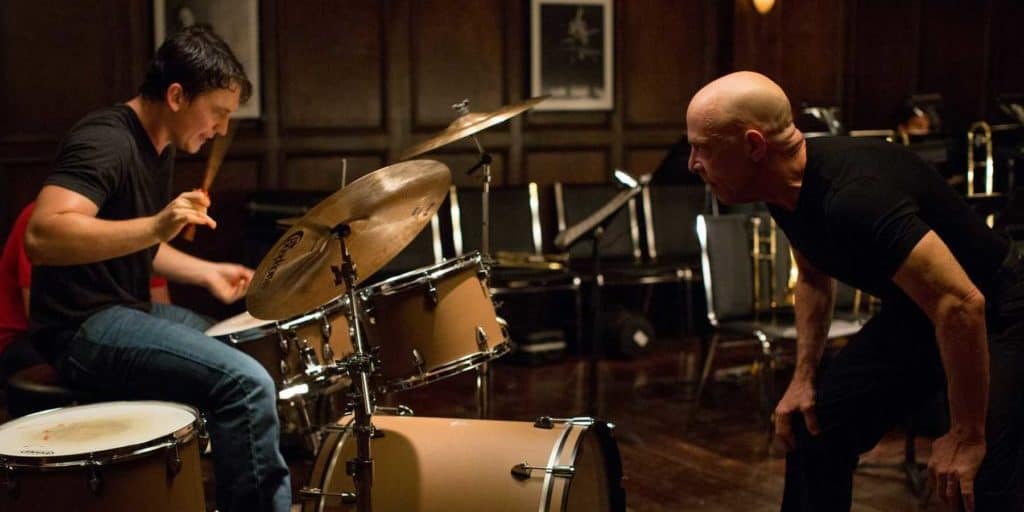
You can learn a well-known song/beat on the drums in around 30 minutes. It often takes 2 years for you to gain a detailed understanding of the drums. If you want to become a professional drummer, 7 to 8 years is typical, but can be faster if you practice harder.
I’ve been playing the drums for over a decade and remember the anxious feeling of starting the journey for myself.
What if I wasn’t any good? What if I didn’t have the talent or musical ability to succeed?
I’m pleased to tell you that over my years as a teacher and a professional player, I’ve never encountered a student that couldn’t play the drums.
Rhythm is such a natural part of who we are.
Many people believe that you have to be born with the ability to keep time, but that’s not the experience I’ve had with my students.
The more that my students practise, the more they develop a natural, flowing ability to keep time.
It is true that different people start at different ability levels, but this isn’t the most important part of becoming a great drummer.
I’ve seen time and time again that the students who are most passionate and practise the most come out on top.
I think it’s time to throw away the old myth that only certain people can play drums and invite you to take up this amazing instrument for yourself!
How good can you get?
The question “is it hard to learn drums?” depends entirely on what you’d like to be able to play!
Let’s say that you want to be able to play your favourite pop and rock songs and start up a local band.
With only a few lessons, you’ll be able to start jamming along to these songs immediately.
That’s because most pop and rock music relies on only a few common drum beats (also known as drum grooves).

As the range and variety of what you want to play expands, you’ll have to practise more.
To play along with a band, you’ll be responsible for keeping time which is a skill that takes a while to develop and understand.
However, with consistent practice and enthusiasm, you’ll make progress with this skill and have a great time sharing your drumming with others!
Is it hard to learn to play drums properly and still have fun?
I’m often asked questions like this when a student is first interested in learning drums.
Is practising a musical instrument fun? Will I have to spend many hours boring myself to death to learn?
After 10 years, I still practise every day and personally, it’s my favourite part of my daily routine.
While some musicians don’t like to practise; others absolutely love it and spend all their free time honing their skills.
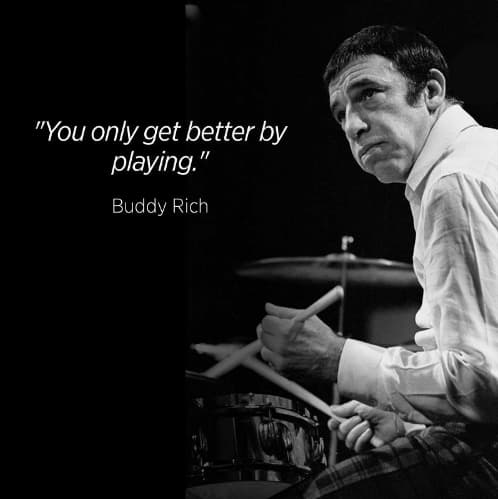
I’ll give it to you straight, most practice doesn’t involve playing along to songs.
Sometimes you’ll be doing exercises that improve your technique or your co-ordination.
Other times you’ll be learning to read music or getting to grips with a brand-new drum groove.
When learning something new, you’ll likely feel a bit overwhelmed by the amount of information your brain has to process. This is only temporary.
Soon, your brain will learn the motions and patterns of drumming, making them completely unconscious.
You won’t have to think about your playing anymore, you’ll simply be able to flow and enjoy the music.
This is when the reward of the practice reveals itself. There’s no better feeling in the world than getting lost in music!
As you practise more and more, your ability to appreciate, create and enjoy music will also increase.
So in a way, learning drums properly and having fun are exactly the same thing.
The more you learn, the more you’ll be able to express yourself, and the more fun you’ll be able to have.
If you are in any doubt as to how you should divide up your practice, famous jazz drummer John Riley has a great tip from his famous book ‘The Art of Bop Drumming’.
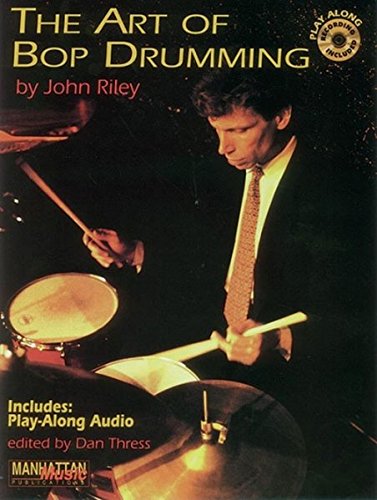
“Spend at least 50% of the time working on your weaknesses, and then the remainder of the time playing what you most love.”
Sounds like a great deal to me!
Is it hard to learn to play drums by yourself?
It’s much harder to learn to play drums if you don’t know what to practise.
I personally feel that some form of teaching is vital to becoming the best drummer that you can be.
When learning with a teacher, you’ll get insights from their years of experience that you may never have discovered otherwise.
I continue to be amazed by my drum teachers, and they continue to inspire me in every single lesson.
That’s why I’d highly recommend getting a drum teacher.
Exactly how you do this is entirely up to you.
If you’re a beginner looking to get started with playing the drums – I’ve created a fun, friendly online video course that gets new drummers like yourself playing along to some great music from the get go.
You find out more about the course on our common drum beats page.
Plus, you don’t even need any equipment to get started, the majority of the lessons can be followed with just your hands and your feet!
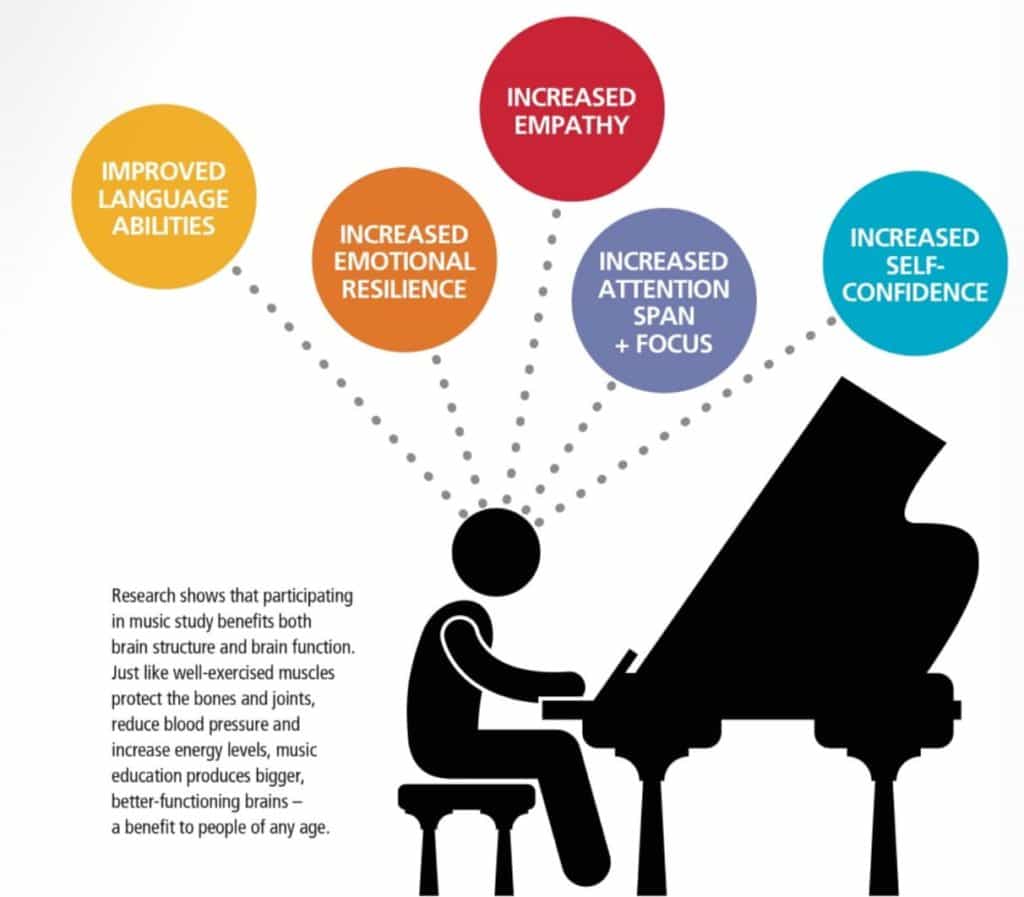
Is it hard to learn drums to a professional level?
Some of you might be thinking a bit further ahead and wondering:
‘Is it hard to learn drums to a professional level?’
Perhaps you dream of playing like John Bonham or Dave Grohl.
But just how hard is it to reach their level?
Put simply, it’s hard, but it’s possible!
The most important thing to remember is that these incredible players started out just like you.
They practised day after day in their garage, making mistakes and feeling frustrated.
But these drummers were passionate enough to keep going and persevere!
If you’re just starting out, don’t worry that the professionals seem so incredibly far ahead.
Remember, many of these drummers have 30 years head start on you!
Fortunately, it doesn’t take 30 years to turn professional.
So what does it take to learn drums to a professional standard?
Professional drummers have typically developed the ability to:
- Play a wide range of musical styles.
- Keep great time.
- Read music (normally).
- Jam and improvise to a high level.
- Create their own musical ideas and solos.
- Produce a high-quality recording sound.
When you start to break it down, it isn’t so intimidating.
Professional drummers can often seem light years ahead of beginner drummers.
Yet in reality, much of their playing is based on the same foundations that beginner drummers are learning for the first time.
Much of the practice that I do is influenced by the drummers that I love to listen to like Steve Gadd, Vinnie Colaiuta and Stewart Copeland.
Here’s a video of Steve and Vinnie, along with the great Dave Weckl, each playing one of the most epic drum solos of all time.
But for someone like me, isn’t it hard to learn the drums?
Like many people, you might be worried that someone in your particular circumstances can’t learn the drums.
We’re taught from a young age that only special, creative people should learn how to play musical instruments.
It’s really easy to see another musician play and think to yourself ‘I couldn’t do that’.
In fact, I still have that feeling sometimes, even after all my years of playing!
But in reality, there are very few situations that would stop you on your journey to becoming a great drummer.
Many people are worried about their age and whether that prevents them from learning effectively.
While children’s brains are more flexible than those of adults (known as neuroplasticity), the adult brain is far from set in its ways.
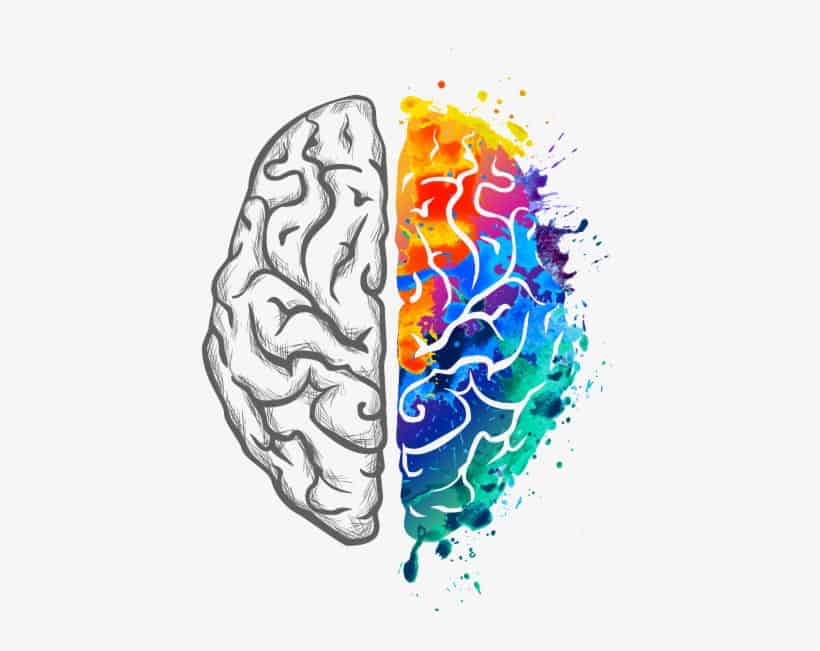
It’s totally possible to develop new skills as an adult, including drumming.
I actually think that the biggest difficulty for adults wanting to learn the drums is accepting that they are a beginner.
I’ve been learning guitar recently and despite being a musician for much of my life, I’ve had to develop brand-new skills that I’ve found tricky.
Accepting that I’m not a great guitarist and learning to have fun with it has really sped up my progress.
Children don’t tend to worry about if they are good on an instrument or not and that really helps them to enjoy the music and the practice that they’re doing.
So be kind to yourself and jump into drumming!
Conclusion
I hope that this article has given you an idea of what it will take for you to learn to play the drums.
If you do want to find out more about how to go about getting yourself started on the drums, I’d love to help you unlock your potential as a musician.
We’ll have plenty of fun, I’ll tell you some silly drumming jokes, but most importantly, we’ll get you rocking out on the coolest instrument on earth.
Check out my common drum beats video page for more info!
I really hope you decide to give drumming a go and let me be the first to welcome you into this fun, kind and friendly community!